

Regaining Control After Prostate Surgery
Urinary leakage after prostate surgery can feel frustrating, embarrassing, and tiring. Many Toronto men notice that they need pads, rush to the washroom more often, or worry about leaving the house. It can affect mood, sleep, sex, and confidence. You are not alone in this, and it is not a sign of weakness.
Recovery after radical prostatectomy is usually a gradual process. Most men see improvements over time, especially when they get early support and clear information. In this article, we will walk through why leakage happens, what a typical recovery timeline can look like, how pelvic floor rehab fits in, and when it may be time to ask a specialist about advanced urinary incontinence treatment options such as a male sling or an artificial urinary sphincter (AUS).
Understanding Post-Prostatectomy Leakage
After the prostate is removed, the way the body holds urine changes. The prostate sits around the urethra, close to the muscles that act like a valve to keep urine in. Surgery can affect that valve, the nerves that help control it, and the way the bladder behaves. While surgeons aim to protect function, some impact on control is common.
The main types of leakage that men tend to notice after surgery:
- Stress incontinence, leaking with coughing, sneezing, lifting, or standing up
- Urgency leakage, a strong, sudden need to pee with little warning
- Mixed symptoms, a blend of stress and urgency
Early on, it is very common to have some degree of leakage, especially after the catheter is removed. Underwear may feel damp by the end of the day, or pads may be soaked during certain activities. This does not automatically mean that something is “wrong,” but it does mean that your body is adjusting.
At the same time, persistent or severe symptoms should not be ignored. If leaks are large, constant, or not improving over time, that is a reason to talk to a health professional about your bladder, your pelvic floor, and the range of urinary incontinence treatment options that might fit your situation.
Typical Recovery Timeline for Toronto Men
Every man recovers at his own pace, but some general patterns are common.
In the days and first couple of weeks after catheter removal, many men experience:
- frequent trips to the bathroom
- leaks when standing, walking, or getting in and out of chairs
- heavier use of pads or briefs, especially later in the day
Over the following weeks and months, the pattern often shifts. The bladder and pelvic floor begin to coordinate better, and men may notice:
- less leakage at night compared with daytime
- fewer full “gushes” and more small drips
- longer gaps between bathroom trips
By several months, many men feel more comfortable leaving home, going back to work, or returning to gentle activities such as walking, light cycling, or casual golf. In Toronto, this often lines up with warmer weather and more time outside. Planning ahead with supplies such as:
- extra pads or briefs in a small backpack,
- a change of underwear, and
- knowing where nearby washrooms are,
can reduce the stress of patios, walks along the waterfront, or time on the course.
There are also red flags that mean you should seek medical attention sooner:
- Worsening or sharp pain in the pelvis or lower back
- Blood in the urine that does not clear
- Fever, burning, or strong discomfort when urinating
- A weak stream or feeling that the bladder will not empty
If leakage is still significant beyond six to twelve months after surgery, it is usually time for a focused continence assessment to look at the cause and consider additional treatment options.
Pelvic Floor Rehab and Everyday Strategies
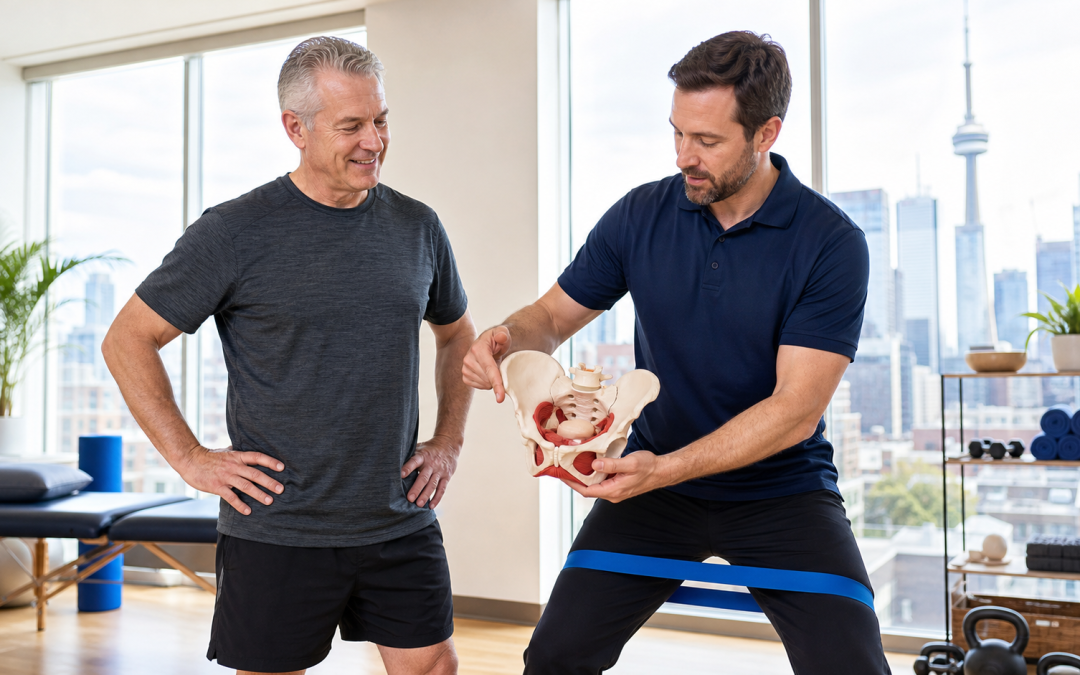
Pelvic floor muscles in men form a sling at the base of the pelvis. They help close the urethra, support the bladder and bowel, and play a role in erections and ejaculation. After prostate surgery, these muscles often need retraining.
Targeted pelvic floor physiotherapy can be an important part of urinary control. A trained pelvic health provider can:
- assess how your pelvic floor is working
- identify whether muscles are weak, tight, or poorly coordinated
- build a tailored exercise plan rather than a generic routine
Kegel-type exercises are common, but they are not the same for everyone. Some men squeeze too hard, hold their breath, or use their buttocks or thighs instead of the right muscles. Good guidance usually covers:
- breathing, exhaling gently as you contract
- posture and body position for early exercises
- safe progression from lying to sitting, standing, and movement
Alongside formal rehab, some lifestyle strategies can support bladder control:
- Bladder training, spacing out bathroom trips in a structured way
- Being aware of caffeine, alcohol, and very spicy or acidic drinks that may irritate the bladder
- Working toward a healthy weight, which can ease pressure on the pelvic floor
- Planning ahead for travel, exercise, and warm-weather activities so you feel prepared, not restricted
These steps are not a quick fix, and they may not fully resolve leakage for everyone, but they can help many men gain better control and confidence.
When to Consider Advanced Surgical Options
For some men, even with time, pelvic floor rehab, and lifestyle changes, incontinence still has a big impact on daily life. When pads remain heavy, you avoid social events, or you limit work or intimacy because of leaks, it may be appropriate to discuss more advanced urinary incontinence treatment options.
Two common procedures that your urologist may talk about are:
- Male sling, a support under the urethra that helps improve resistance to leakage, often used in men with mild to moderate stress incontinence
- Artificial urinary sphincter (AUS), a device placed around the urethra that can be opened and closed using a small pump in the scrotum, often considered for more severe or longstanding stress incontinence
Not everyone is a candidate for these options. Suitability can depend on:
- the type and amount of leakage
- previous surgeries or radiation
- overall health and personal goals
Any discussion about a male sling or AUS should include clear information about the expected benefits, possible risks, alternatives, and the fact that no procedure can guarantee complete dryness. Timelines around consultation, decision-making, and recovery can vary, and men often need time and support to weigh their choices.
Specialist clinics can play an important role in coordinating care, helping you prepare questions for your urologist, and supporting your recovery plan before and after any procedure.
How Sovereign Male Supports Your Next Steps
At Sovereign Male Wellness Clinic in Toronto, we focus on male health concerns, including urinary leakage after prostate surgery. We understand that talking about continence can feel uncomfortable, and we aim to provide a discreet, respectful setting where you can speak openly about what you are going through.
Our team works within CPSO guidelines and collaborates with urologists and other health professionals involved in your care. We offer individualized assessments that consider pelvic floor function, bladder habits, hormone status, sexual health, and overall wellness. From there, we can help you understand conservative options, guide you toward pelvic floor-focused strategies, and discuss when it might be appropriate to ask your specialist about advanced procedures such as a sling or AUS.
You do not need to wait until leakage limits every outing or makes you avoid the things that you enjoy. With the right information, support, and plan, many men find that they can move toward stronger control and a more confident day-to-day life after prostate surgery.
Take Control of Urinary Leaks and Restore Your Confidence
If bladder leaks are holding you back, Sovereign Male Wellness Clinic is here to help you regain control and comfort. Our evidence-based urinary incontinence treatment plans are tailored to your specific symptoms, lifestyle, and goals. We take the time to listen, assess thoroughly, and explain clear options, so you can make confident decisions about your health. Ready to talk to a specialist in a private, judgement-free setting? Simply contact us to book your confidential consultation.

