

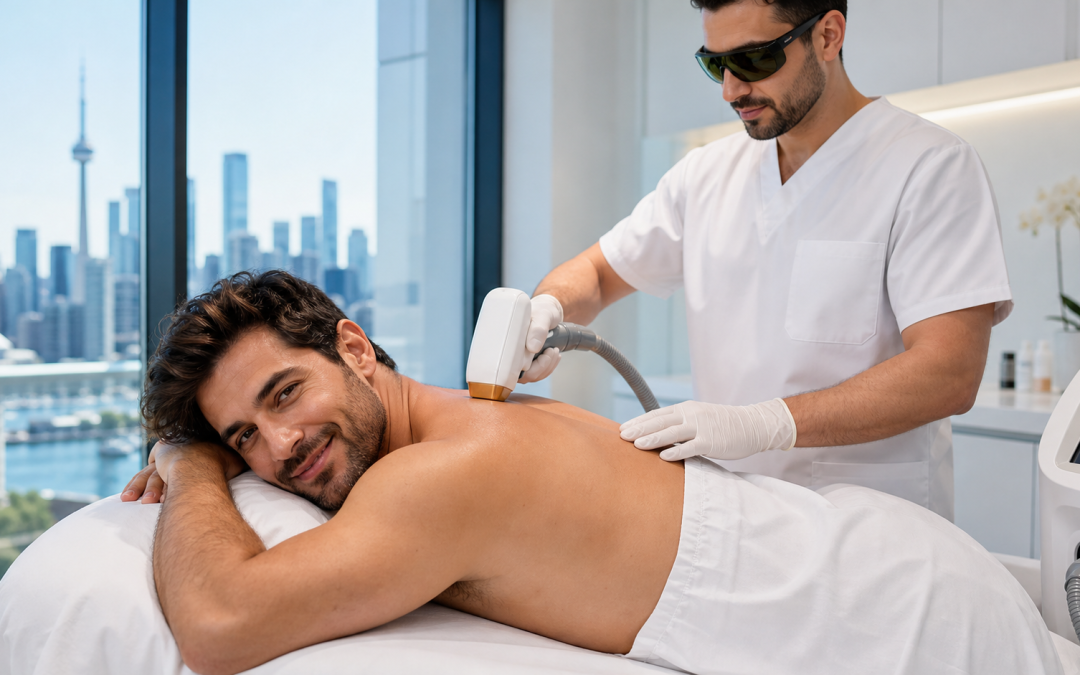
Why More Toronto Men Are Choosing Laser Hair Removal
Grooming standards for men are changing. At the gym, in the office, and at the cottage, more men want clean, low-maintenance skin without razor burn or stubble. Hair on the back, chest, shoulders, or neck can feel annoying, uncomfortable, or simply not in line with how you want to present yourself.
Laser hair removal is becoming a popular option for men who are tired of constant shaving or waxing. Instead of dealing with ingrown hairs or irritation every few days, many men prefer a longer-term way to reduce hair growth. With medically supervised care and proper planning, it can be a practical way to simplify your routine and feel more confident in your own skin.
At a male-focused clinic, treatments are built around male hair growth patterns, skin types, and comfort levels. That means larger treatment areas, thicker hair, and privacy needs are taken seriously, all in a discreet setting that is compliant with the College of Physicians and Surgeons of Ontario (CPSO) and that respects your time and your goals.
Myth: Laser Hair Removal Is Only for Women
One of the most common misconceptions is that laser hair removal is a “women’s treatment.” That is not the case. Many men in Toronto, including professionals, athletes, and those who simply care about grooming, are choosing laser hair removal as part of their regular self-care.
Common treatment areas for men:
- Back and shoulders
- Chest and abdomen
- Neck and beard line
- Upper cheeks and jawline
- Ears and sometimes upper arms
Some men want a completely smooth look, while others just want the hair thinned out or shaped. A male-focused setting understands that goals vary. You might want your beard line cleaned so that you can stop shaving your neck every morning or your back hair reduced so that you feel more comfortable at the pool.
In a clinic geared toward men, we pay attention to:
- thicker hair density and coarser texture
- larger body areas and longer sessions
- modesty, privacy, and clear communication
- a respectful, judgement-free environment
The focus is on comfort, realistic expectations, and treatments that make sense for your lifestyle, not anyone else’s.
Myth: It’s Too Painful and Unsafe for Men
Another big concern is pain. Many men worry that laser hair removal will feel unbearable, especially on sensitive areas. In reality, most people describe the sensation as a quick snap or flick on the skin, or a brief warmth. It can feel stronger in areas with dense hair, but sessions are usually quick, and modern devices often include cooling features that help reduce discomfort.
We also take steps to keep you as comfortable as possible, such as:
- adjusting settings to your skin and hair type
- using cooling methods before, during, or after each pulse
- working in smaller sections, so you can take brief breaks, if needed
- talking you through what to expect before we start
On the safety side, there is a lot of fear based on myths. Proper laser hair removal targets the pigment in hair follicles in the skin. It does not reach deeper structures linked to sexual function or fertility. When performed under medical oversight, with careful skin typing and evidence-informed protocols, the risk of problems like burns or pigmentation changes is reduced.
Before any treatment, you should have:
- a health review to flag any conditions or medications
- a skin and hair assessment
- a chance to ask questions about risks and expected outcomes
This kind of structure supports both safety and peace of mind.
Myth: It Does Not Work on Dark or Tanned Skin
Older laser technologies were less flexible, and people with darker or recently tanned skin sometimes had more side effects. This history is part of why the myth still exists. Newer devices and updated techniques can treat a wider range of skin tones, as long as the settings and timing are chosen carefully.
A proper consultation is key, especially if you have darker skin or spend a lot of time outdoors. During that visit, we will typically:
- review your medical history and current medications
- ask about recent sun exposure and tanning habits
- check for self-tanner or photosensitizing products
- assess your natural skin tone and hair colour in person
For men in Toronto who enjoy patios, sports, or trips down south, timing matters. We often suggest planning sessions when your skin is at its natural tone, not freshly tanned. We also talk about daily sun protection on treated areas and how to plan around busy outdoor seasons.
Individualized plans might include the following:
- Scheduling more sessions in cooler, lower-UV months
- Adjusting settings to match your skin and hair
- Longer gaps between treatments if recent sun exposure is an issue
- Clear homecare instructions to reduce the chance of irritation
Myth: Results Are Instant and Completely Permanent
Laser hair removal is not a one-and-done treatment. Hair grows in cycles, and the laser works best when hair is in its active growth phase. Because not all hairs are in that phase at the same time, multiple sessions are needed, usually spaced several weeks apart.
It helps to think about results as long-term reduction rather than a promise of zero hair forever. Over time, most men see:
- fewer hairs in the treated area
- finer and lighter regrowth
- slower growth between sessions
- less irritation compared to shaving or waxing
On some hormone-sensitive areas, like the chest or lower abdomen, occasional maintenance sessions may make sense to keep results stable. Factors that can influence your outcome:
- Hair colour and thickness
- Hormone levels and age
- Treatment area and skin type
- Consistency with the suggested schedule
Sticking to your plan and showing up on time for each session usually leads to better, more lasting improvements.
Myth: Winter Is the Only Time to Start Treatments
It is true that many people begin laser hair removal in colder months, when they are less tanned and more covered up. But that does not mean winter is the only safe or effective time for treatment. With the right sun precautions and guidance, laser hair removal can be done year-round.
Starting in early autumn in Toronto has some benefits. The intense summer sun is fading, and you still have several cooler months ahead to build your treatment series. That way, by the time spring rolls around, you can already be enjoying smoother, lower-maintenance skin on areas like the back, chest, or neck.
Good pre- and post-care is important, no matter when you start. This usually includes:
- using sunscreen on exposed treated areas
- avoiding tanning beds and deliberate tanning
- following simple, gentle skincare instructions
- planning treatments around beach vacations or long outdoor trips
With realistic expectations and clear guidance, you do not have to wait for the coldest part of the year to begin.
Take the Next Step Toward Confident, Low-Maintenance Skin
If you are tired of shaving your neck every morning, dealing with ingrown hairs on your chest, or feeling self-conscious about back hair, laser hair removal for men in Toronto may be worth exploring. The goal is not perfection; it is comfort, confidence, and a routine that fits your life.
At Sovereign Male Wellness Clinic, we focus on evidence-informed care for men in a discreet, CPSO-compliant setting. Laser hair removal plans are tailored to male hair growth patterns, skin types, and personal goals, with medical oversight and clear communication at every step so that you can make informed choices grounded in science, not myths.
Confidently Take Control of Unwanted Hair Today
If you are ready for smoother skin and a grooming routine that actually fits your lifestyle, we invite you to explore our dedicated service for laser hair removal for men in Toronto. At Sovereign Male Wellness Clinic, we tailor each treatment plan to your hair type, skin tone, and long-term goals, so you can feel comfortable and confident year-round. Book a consultation today so we can walk you through the process, answer your questions, and map out a realistic timeline for results. If you prefer to speak with our team first, simply contact us to get started.

