

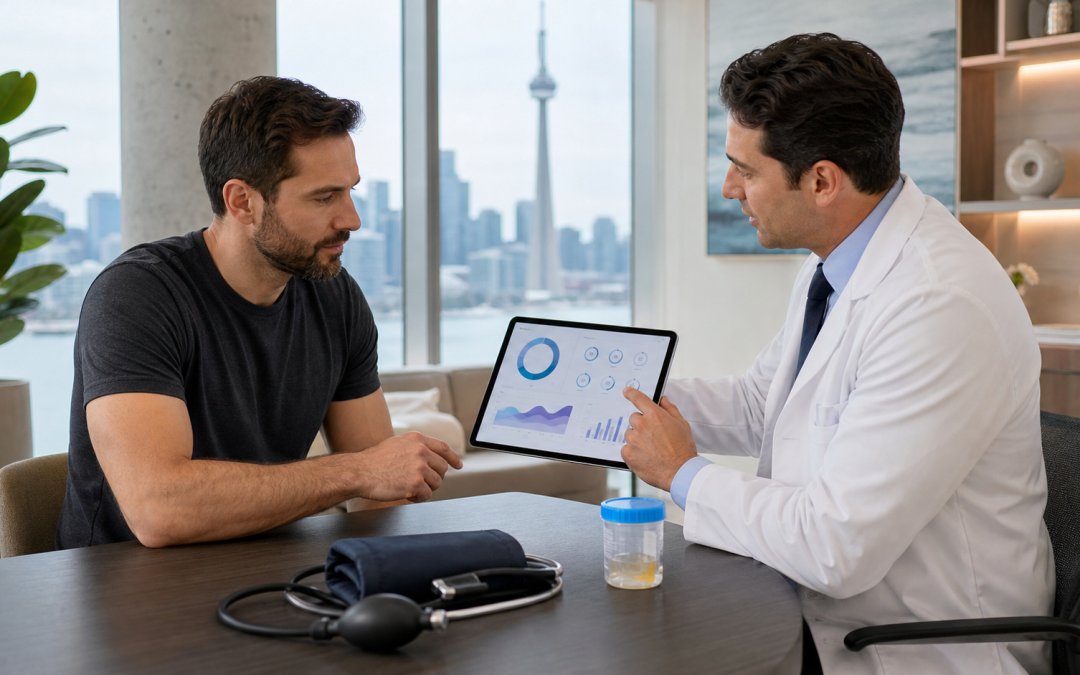
Post-Cycle Reality Check for Toronto Men
Stopping human growth hormone (HGH) therapy, including cycles that were not prescribed or medically supervised, is a significant health turning point. Once the last injection is done, your body has to reset, and that reset can be smooth or stressful, depending on how closely you and your health-care provider monitor your health. Many men in Toronto finish a cycle, feel “pretty good,” and move on without checking what is happening under the surface.
This article is for general education only. It does not provide medical advice, diagnosis, or treatment and is not an endorsement of HGH use from non-medical sources. Any decisions about testing or treatment must be made in partnership with a qualified physician licensed to practise in your jurisdiction, who can review your full medical history, medications, and current health status. If you are using or have used HGH from any source, it is important to discuss this openly with your physician.
The goal here is to explain why the post-cycle phase may matter even more than the cycle itself, especially when it comes to long-term metabolic, cardiovascular, sleep, and sexual health. As fall routines settle in and life gets busier, this can be an appropriate time to speak with your health-care provider about a health review, rather than waiting for problems to appear later.
Why Post-HGH Monitoring Matters More than the Cycle
Human growth hormone affects many systems in the body, not just muscles or body fat. It can influence the following:
- How your body handles blood sugar
- Your cholesterol and triglycerides
- Blood pressure and circulation
- Fluid balance and swelling
- Sleep quality and breathing at night
- Nerve compression, including wrist and hand symptoms
Some of the strain from a cycle may not appear fully until after you stop. For example, insulin resistance can develop without obvious early symptoms. Sleep apnea may start or worsen with fluid shifts and weight changes. Lipids and blood pressure can rise as training intensity changes and day-to-day stress, alcohol, or comfort food increase.
Two common beliefs tend to cause problems: “I feel fine, so I must be fine,” and “My cycle was short, so I do not need follow-up.” In reality, early lab changes, rising blood pressure, or subtle issues such as slower recovery can be warning signs long before clear symptoms show.
A physician who provides male focused care can review your overall health, not just one hormone. That means combining your history of HGH use with blood work, blood pressure checks, and a discussion about sleep, energy, sex drive, and mental focus, in a discreet, non-judgmental manner that aligns with Canada and Ontario standards of practice.
IGF-1 and Metabolic Health After HGH
IGF-1 is one of the key markers to review after stopping HGH. It is produced mainly in the liver in response to growth hormone and provides a sense of how your body has been responding and how it is settling after a cycle.
Both very high and very low IGF-1 levels may be associated with health risks, depending on the person and the context. When you speak with a physician, it is helpful to cover:
- when to check IGF-1 after your last dose
- how your result fits into age-specific reference ranges
- how your training, diet, and sleep might be affecting the number
- whether follow-up testing is needed as your routine changes
IGF-1 should be interpreted alongside how you feel and function. Shifts in IGF-1 can go along with changes in body composition, strength, energy, and libido. However, IGF-1 is only one part of the picture. It should be considered together with other labs such as glucose, A1C, lipids, and hormone panels, as well as your medical history and physical examination, rather than being treated as a single score that defines your health or performance.
Glucose, A1C, and Hidden Insulin Resistance
HGH can make insulin work less effectively in some men. That can increase blood sugar and raise the risk of prediabetes or diabetes, even after a cycle has ended. This is why checking both fasting glucose and A1C with your physician can be important.
Fasting glucose is a short-term snapshot; it shows where your blood sugar sits on that specific morning. A1C is more like a report card for the last few months, giving an average view. For some men, a physician may also suggest fasting insulin or an oral glucose tolerance test, especially if there is central weight gain or a family history of diabetes.
After a cycle, a doctor may time these tests to identify changes as your body shifts back toward its baseline. This can be particularly relevant for men over 35 or those who carry more fat around the midsection.
Warning signs that often get dismissed:
- Afternoon energy crashes or brain fog
- Feeling thirstier than usual
- More frequent urination, especially at night
- Belly fat that does not respond despite consistent efforts
Early identification of insulin resistance or elevated blood sugar allows for evidence-based management. Adjustments in food choices, physical activity, sleep, and stress can all play a role. In some cases, medical treatment may be appropriate. A physician who understands male health can connect these metabolic findings to other concerns such as low libido, fatigue, or mood changes, so you are not treated as if each symptom exists in isolation.
Lipids, Blood Pressure, and Silent Cardiovascular Strain
Human growth hormone therapy, and the period after you stop, can affect your cholesterol profile and blood pressure. Added to common seasonal habits like more screen time, more sitting indoors, weekend drinks, and higher work stress, your heart and blood vessels may be under more strain than you realize.
Key things your physician may monitor:
- A full lipid panel, including low-density lipoprotein (LDL), high-density lipoprotein (HDL), and triglycerides
- Resting blood pressure in clinic
- Home blood pressure readings, if recommended
“Borderline” readings are easy to ignore, especially if you exercise regularly or feel fit. However, small changes are often where long-term risk begins to develop. Subtle red flags can include reduced exercise tolerance, feeling more winded on stairs, a sense of new chest tightness, or more headaches.
Many cardiovascular risks can be improved with evidence-based strategies. Changes in diet, sleep, and stress management, along with exercise that matches your current health status, can all help. When needed, medications may be recommended. The key is working with a physician who focuses on your overall health and risk reduction, in line with Canada guidelines, rather than focusing solely on short-term gains.
Sleep Apnea, Edema, and Carpal Tunnel After the Cycle
HGH often causes some degree of fluid retention. That extra fluid can collect in different places and lead to problems like sleep apnea, swelling, and nerve compression in the wrists.
After a cycle, some of that fluid may shift or resolve, but it is still important to watch for:
- loud snoring or gasping at night
- morning headaches or dry mouth
- swollen ankles, hands, or puffiness around the face
- numbness, tingling, or burning in the hands and fingers
These changes can be easy to overlook or attribute to other causes, such as being “tired from work” or spending more time at the keyboard. A medical review can include a sleep history, screening for sleep apnea, and assessment of nerve symptoms that may need further testing.
Treating sleep apnea can support blood pressure control, daytime focus, and exercise recovery. Addressing ongoing edema or carpal tunnel symptoms can help protect circulation and nerve function over time. Your physician can coordinate referrals for sleep studies or nerve assessments when indicated.
Building a Post-HGH Health Plan with Expert Support
The end of a human growth hormone therapy cycle should not be the end of the discussion about your health. It can be the start of a more informed, medically supervised plan.
Depending on your individual situation, your physician may consider:
- IGF-1 testing with appropriate timing
- glucose, A1C, and other metabolic labs, if indicated
- a full lipid panel and blood pressure review
- a discussion of sleep quality, sexual health, energy, and recovery
In a clinical setting focused on men’s health, a post-cycle review can include a detailed history, an honest look at past or current HGH use, and a testing plan that fits your age, goals, and risk factors. From there, your physician can discuss safe, evidence-based options for managing hormone-related concerns and other health issues, in accordance with Canada standards of care and CPSO policies. Any treatment plan should prioritize your long-term health and safety, rather than non-medical performance enhancement.
Human growth hormone therapy carries real risks, whether obtained through medical or non-medical channels. Stopping a cycle is not the finish line. It is a point where careful monitoring and medically appropriate follow-up can help protect your long-term metabolic, cardiovascular, sleep, and sexual health. If you have used or are considering using HGH, speak with a licensed physician in Ontario or your local jurisdiction to obtain individualized advice.
Take the First Step Toward Renewed Strength And Vitality
If you are ready to explore how targeted human growth hormone therapy could support your energy, recovery, and overall wellness, we are here to help you make an informed decision. At Sovereign Male Wellness Clinic, we start with a detailed assessment, so we can tailor recommendations to your unique health profile and goals. Reach out to our team with your questions or to book a confidential consultation through our contact page today.

