

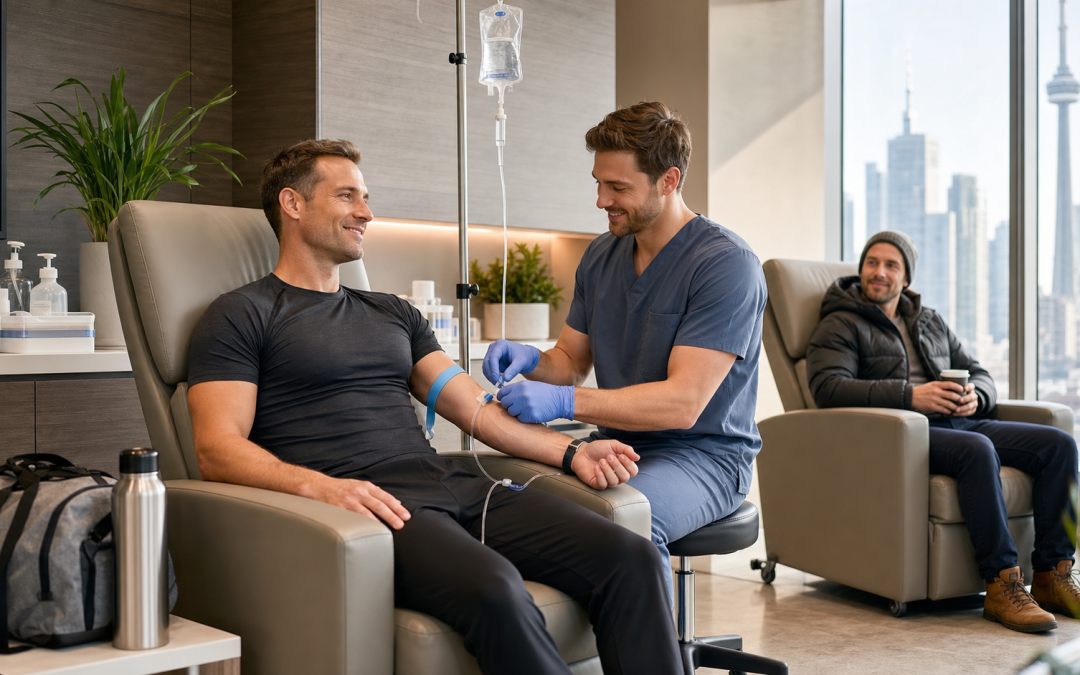
From Run-Down to Resilient: When IV Therapy Makes Sense
Feeling wiped out for weeks after a bad flu, a COVID infection, or a stomach bug is frustrating. So is dragging yourself through workouts when your legs feel like concrete and your brain will not cooperate. Many men in Toronto are turning to IV therapy for faster recovery and to support performance, but the real question is: What is your body actually asking for?
At our men’s clinic, we see busy professionals, active dads, and serious lifters who are not sure if they’re dealing with post-illness fallout or simple training fatigue. Mixing these up can delay proper care and keep you stuck in a low gear. Intravenous (IV) therapy in Toronto should never be a random drip in a chair. IV therapy should be physician-led, individualized, and based on a real medical assessment.
Post-Illness Slump or Training Fatigue
A lingering post-illness slump and overtraining can feel similar at first, but there are key differences. Post-illness symptoms often show up as a cluster of issues that feel out of proportion to your current activity level, especially when they follow a clear infection or stomach illness.
Common post-illness symptoms:
- Prolonged exhaustion that does not match your activity level
- Breathlessness with light activity, like stairs or a short walk
- Night sweats or chills
- Persistent cough or chest tightness
- Appetite changes or weight loss
- Brain fog or feeling “slow” mentally
Typical training or recovery fatigue tends to look more like your body struggling to keep up with the workload, especially after a jump in volume, intensity, or heat exposure.
Typical training or recovery fatigue looks different:
- Heavy legs and slower recovery between workouts
- Poor sleep or trouble staying asleep
- Irritability or low motivation to train
- Declining performance even though you are still training hard
- Elevated resting heart rate compared to your normal baseline
Timing and triggers are important. If symptoms started after a flu, COVID, food poisoning, or a stomach virus, we think about post-illness recovery. If they showed up right after you increased workout volume, intensity, or added heat exposure, overtraining or under-recovery may be more likely.
Some symptoms should not be brushed off as normal fatigue from training. When the body sends signals that could suggest a heart, lung, or systemic issue, the priority is medical assessment before anyone considers IV therapy.
Some signs should never be written off as “gym tired”:
- Chest pain, pressure, or tightness
- Shortness of breath at rest or with very light effort
- Ongoing fever or night sweats
- Sudden, unexplained weight loss
- Heart palpitations or feeling that your heart is racing out of nowhere
What IV Therapy Can and Cannot Do Safely
IV therapy can be a helpful tool, but it is not magic. In a physician-led setting, IV therapy in Toronto may support men who need supervised rehydration or correction of certain imbalances, especially when symptoms or circumstances make oral intake unreliable. It is best understood as one option inside a broader care plan.
In a physician-led setting, IV therapy in Toronto may support men who are struggling with:
- rehydration after illness if oral fluids are not enough
- certain electrolyte disturbances, when confirmed or suspected
- recovery as part of a wider treatment plan that may also include rest, medication, or lifestyle changes
There are also clear limits to what IV therapy can responsibly address. If an underlying condition needs diagnostics, medication, or time for the body to recover, an IV drip does not replace that work.
There are clear limits. IV therapy cannot:
- cure infections, pneumonia, or COVID
- treat serious heart or lung disease
- replace proper diagnostics, medication when indicated, or time off training
- fix deeper problems like severe sleep issues or uncontrolled blood pressure
Safe care in Ontario means following College of Physicians and Surgeons of Ontario (CPSO) expectations. In practice, that means IV therapy should be delivered with the same clinical standards as any other medical intervention, including appropriate screening and follow-through.
That includes:
- assessment by a licensed physician before treatment
- informed consent and clear discussion of possible risks
- attention to complications like infection, vein irritation, fluid overload, or rare allergic reactions
- proper documentation of what was given and why
IV therapy should sit inside a real plan, not replace one.
Hydration, Electrolytes, and Labs that Actually Matter
Dehydration from a virus and dehydration from hard summer training can look alike. Both can cause fatigue, light-headedness, and headache. The difference is that more significant dehydration often comes with more objective signs that point to your body struggling to maintain normal circulation and hydration.
A clinician will look for signs that point to more than just mild fluid loss, such as:
- low blood pressure or big drops when you stand up
- very rapid heart rate
- dry mouth, very dark urine or almost no urine
- confusion or difficulty concentrating
Sometimes lab work makes sense before or alongside IV therapy. This is especially true when fatigue is prolonged, symptoms are unclear, or there is concern about electrolyte balance or organ stress after illness, intense training, or heat exposure.
Depending on your symptoms and history, a physician may consider checking the following:
- Kidney function
- Sodium, potassium, and magnesium
- Full blood count
- Markers of inflammation
- Iron status, especially with long-term fatigue
As a general guide, many men can recover with oral hydration and nutrition when symptoms are mild and trending in the right direction. The decision often comes down to safety, trajectory, and whether you can keep up with fluids and food.
Oral hydration and nutrition may be enough if:
- your fatigue is mild and improving
- you have no red flags
- you are drinking and keeping fluids down without trouble
A physician may recommend IV fluids when you are not keeping up by mouth, or when your symptoms and findings suggest that you need a faster, supervised correction. On the other hand, IV therapy may be deferred if your symptoms point toward a deeper issue that needs more testing or specialist care first.
Summer in Toronto: Heat, Training Load, and Recovery
Hot, humid Toronto summers add another layer. Outdoor runs, team sports, long bike rides, and construction or shift work can all increase fluid and electrolyte loss. That loss can build up over days and push you from “a bit tired” to wiped out.
Normal post-workout tiredness usually feels like:
- muscle soreness that settles with rest
- mild fatigue that improves over 24 to 48 hours
- clear urine and normal thirst
In hot weather, the line between ordinary fatigue and something more serious can get blurry. When symptoms suggest that your body is overheating or your hydration status is deteriorating quickly, it is important to treat that as a warning, not a performance inconvenience.
Warning signs in hot weather:
- Dizziness, confusion, or trouble thinking clearly
- Severe muscle cramping
- Dark, strong-smelling urine or very little urine
- Fainting or nearly fainting
These may point toward heat exhaustion or heat stroke, which are medical emergencies and not situations for routine IV therapy in a clinic setting.
For some men, IV therapy can be one piece of a broader summer performance plan, but it rests on basics. If those basics are not in place, IV therapy is unlikely to deliver meaningful or lasting results.
It rests on basics:
- Consistent sleep
- Enough calories and protein
- Thoughtful hydration strategies before, during, and after training
- Gradual progression in training load, not big jumps
Without these, even the best IV formula will not give the results you want.
Red Flags You Must Not Ignore
Some symptoms mean it is time for urgent medical help, not a same-day drip. These signs can indicate potentially serious cardiovascular, neurological, infectious, or gastrointestinal issues that need immediate evaluation.
Some symptoms mean it is time for urgent medical help, not a same-day drip:
- Chest pain or pressure
- Difficulty breathing or shortness of breath at rest
- Severe or sudden headache, especially with confusion or vision changes
- High fever that is not settling
- Blood in stool or vomit
- Rapid heart rate at rest that feels out of control
- Sudden swelling, pain, or redness in one leg
There are also situations where IV therapy may be inappropriate or need extra caution. In these contexts, the concern is that fluids or certain ingredients could worsen the underlying condition, or that the patient may need closer monitoring than a routine clinic visit can provide.
There are also situations where IV therapy may be inappropriate or need extra caution, such as:
- certain heart conditions
- kidney disease or reduced kidney function
- uncontrolled high blood pressure
- medications that affect fluid balance
At a physician-led men’s clinic, we screen for these risks first, and we consider IV therapy only when it is safe and fits your overall picture. If your symptoms suggest that you need hospital-level care or a specialist, that becomes the priority.
How Sovereign Male Helps You Choose the Right Path
At Sovereign Male Wellness Clinic in Toronto, our starting point is always a confidential medical conversation. We review your health history, current symptoms, recent illnesses, training habits, work demands, and any medications or supplements. A physical exam may be part of this, along with checking vital signs like blood pressure and heart rate.
From there, next steps are tailored to what we find and to what you actually need to recover safely and get back to performing well. In some cases, IV therapy may make sense; in others, the better path is adjusting training, doing lab work, or investigating other drivers of fatigue.
Depending on your situation, that could include:
- physician-directed IV therapy when appropriate
- guidance on adjusting training and recovery
- further lab testing when fatigue is persistent or unclear
- considering other contributors to low energy, such as hormone balance, sleep quality, or nutrition
Our goal is to help you understand whether you are dealing with post-illness recovery, overtraining, or something more serious, and then build a safe plan around that. IV therapy can be part of that plan, but it is never the whole plan on its own.
Reclaim Your Energy and Performance with Targeted IV Support
If you are ready to boost your energy, recovery, and overall vitality, our tailored IV therapy in Toronto can help you feel your best faster. At Sovereign Male Wellness Clinic, we customize every drip to your specific health goals, from performance and focus to immune support and hydration. Reach out today to discuss what you are looking to achieve and how we can support you. You can contact us to book a visit or ask any questions about getting started.

