

When Pelvic Pain Starts to Disrupt Your Sex Life
Persistent pelvic pain is not just an annoyance; it can slowly drain your confidence, especially in the bedroom. For men, this discomfort can show up in the lower abdomen, groin, perineum, testicles, or penis, and when it lasts longer than a few weeks, it often starts to affect erections and desire. Many men notice themselves avoiding sex, worrying about performance, or feeling on edge before any kind of intimacy.
In Toronto, many men push these symptoms aside. Busy workdays, long commutes, and the pressure to “push through” pain can make it easy to ignore what the body is trying to say. Some feel embarrassed to talk about pelvic pain or erectile changes, or they hope it will quietly settle on its own. At Sovereign Male Wellness Clinic, we want men to know that chronic pelvic pain can be closely linked with erectile dysfunction, and understanding that connection is an important first step in seeking appropriate, physician-guided erectile dysfunction treatment. This article is for general education only and should never replace personal medical advice. Any concerns should be discussed directly with a qualified health professional in Ontario.
How Persistent Pelvic Pain Affects Erections
There are many possible reasons why a man might develop ongoing pelvic pain. Some of the more common causes:
- Chronic prostatitis or chronic pelvic pain syndrome
- Tight or overworked pelvic floor muscles
- Nerve irritation in the pelvis or lower back
- Changes after an injury, infection, or surgery in the area
Only a health professional can sort out what is going on in any one case, but we know that, whatever the cause, long-lasting pain in this area can affect erections in more than one way. Pain signals can interfere with normal blood flow in the pelvis. Muscles can tighten up in response, including the pelvic floor muscles that play a role in erections and ejaculation. The body goes into a stress response, with more tension and a harder time relaxing into arousal.
There is also the mental side. Men often start to worry about:
- pain getting worse during sex
- losing an erection because of discomfort
- letting a partner down or “failing” during intimacy
That mix of physical pain and mental stress can create a loop. Pain increases anxiety, anxiety makes erections harder to achieve, erection problems increase stress and self-criticism, which can make the pain feel more intense. The key message is that both pelvic pain and erectile dysfunction are common, and there are treatment options when they are addressed early and safely with a physician.
When Pelvic Discomfort Signals More than Just Stress
Not every twinge in the groin is a sign of a serious problem. But some patterns should prompt faster assessment, instead of waiting month after month. Warning signs that pelvic pain should be checked by a physician include:
- pain that lasts longer than a few weeks
- pain that worsens with sitting, cycling, or ejaculation
- burning or stinging with urination
- visible blood in urine or semen
- fever, chills, or feeling generally unwell
- a sudden change in erections or new erectile difficulties
These symptoms can come from a range of causes. Sometimes the source is muscle tension. In other cases, infection, inflammation, vascular changes, or other conditions may be involved. Under Ontario standards of care and College of Physicians and Surgeons of Ontario (CPSO) guidance, only a regulated health professional can assess, diagnose, and advise on the next steps.
In Toronto, men might access care through a family physician, a urologist, pelvic floor physiotherapy, or a specialized men’s wellness clinic. Early assessment can keep symptoms from becoming more fixed and distressing. It can also reduce the temptation to self-diagnose through online searches or to experiment with unregulated products that may not be safe.
What a Toronto Men’s Health Assessment May Include
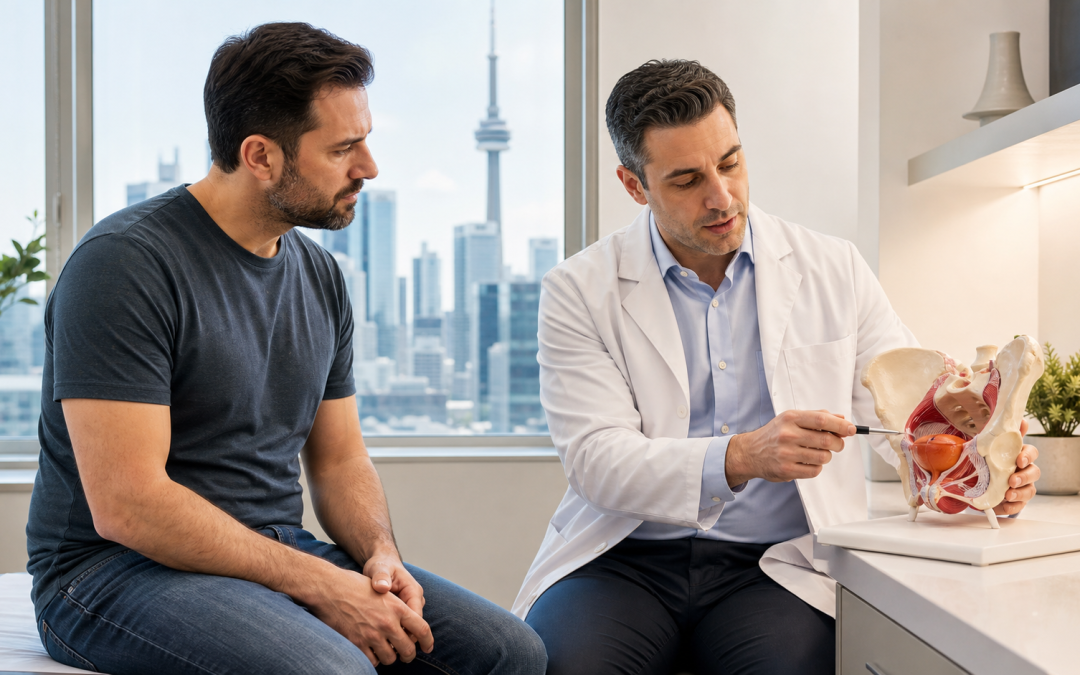
When a man finally decides to talk about pelvic pain and erectile concerns, he often worries about what will happen next. A typical medical assessment is focused, private, and guided by open conversation. A physician will usually start with a detailed history, including the following:
- When the pain started, what it feels like, and what makes it better or worse
- Any changes in erections, desire, ejaculation, or orgasm
- Current medications, alcohol use, nicotine or vaping, and cannabis
- Sleep quality, exercise habits, and work factors like long hours of sitting
- Stress, mood, and relationship concerns
A focused physical exam may be suggested, depending on the concerns and comfort level of the patient. When appropriate, a physician may order lab tests, such as hormone levels, blood sugar, cholesterol, and urine testing. These can give more information about what might be contributing to both pain and erectile changes.
Safe, evidence-based erectile dysfunction treatment is never one-size-fits-all. Depending on the assessment, a physician may recommend these:
- Targeted lifestyle changes, such as adjustments to exercise and sitting time
- Pelvic floor physiotherapy referral for muscle tension and coordination
- Prescription medication for erections, when safe and appropriate
- Mental health or sex therapy support to address anxiety and relationship strain
Every plan is tailored to the man’s health history, goals, and any other medical conditions.
Integrating Pelvic Pain Care Into Erectile Dysfunction Treatment
Pelvic pain and erectile dysfunction are often tightly linked. Treating only one side of the problem may not give the best results. Many men benefit from a broader, integrated plan that looks at the full picture: pain, physical health, performance anxiety, and partner dynamics.
Possible parts of a comprehensive plan:
- Supervised exercise and weight management for better circulation
- Reducing long periods of sitting, especially for desk-based or driving jobs
- Stress reduction tools, such as breathing exercises or mindfulness techniques
- Pelvic floor physiotherapy to work on muscle tension, endurance, and control
- Careful review and adjustment of medications by a physician
Continuity of care matters. In Toronto, seeing the same clinical team for follow-up allows careful monitoring of how symptoms change over time. Medications can be adjusted, side effects checked, and new concerns explored as they come up. This kind of ongoing support helps keep erectile dysfunction treatment safe, realistic, and aligned with current Canada medical guidance.
Taking the Next Step Toward Comfortable, Confident Intimacy
When pelvic discomfort and erectile changes show up together, it is the body’s way of saying that something needs attention. Waiting, hoping it will “just pass,” or relying on random online advice can prolong both the pain and the stress. Speaking directly with a qualified physician offers a clearer, safer path forward.
Before an appointment, it can help to keep a brief symptom diary. Note when the pain occurs, how strong it feels, any triggers such as sitting, cycling, or ejaculation, and any medicines or supplements you are taking. Write down questions about sexual performance, confidence, or relationship worries. Bringing this information to a men’s health-focused visit, such as at Sovereign Male Wellness Clinic in Toronto, allows for a more focused conversation about erectile dysfunction treatment and pelvic pain. It is a confidential, proactive step to support your overall health, your sexual well-being, and your long-term quality of life.
Reclaim Confidence with Proven, Discreet Support
If you are ready to address performance concerns in a private, professional setting, our team at Sovereign Male Wellness Clinic is here to help. We provide personalized erectile dysfunction treatment plans tailored to your health history, goals, and comfort level. Book a confidential consultation today or contact us with any questions about what to expect from your first visit.

