

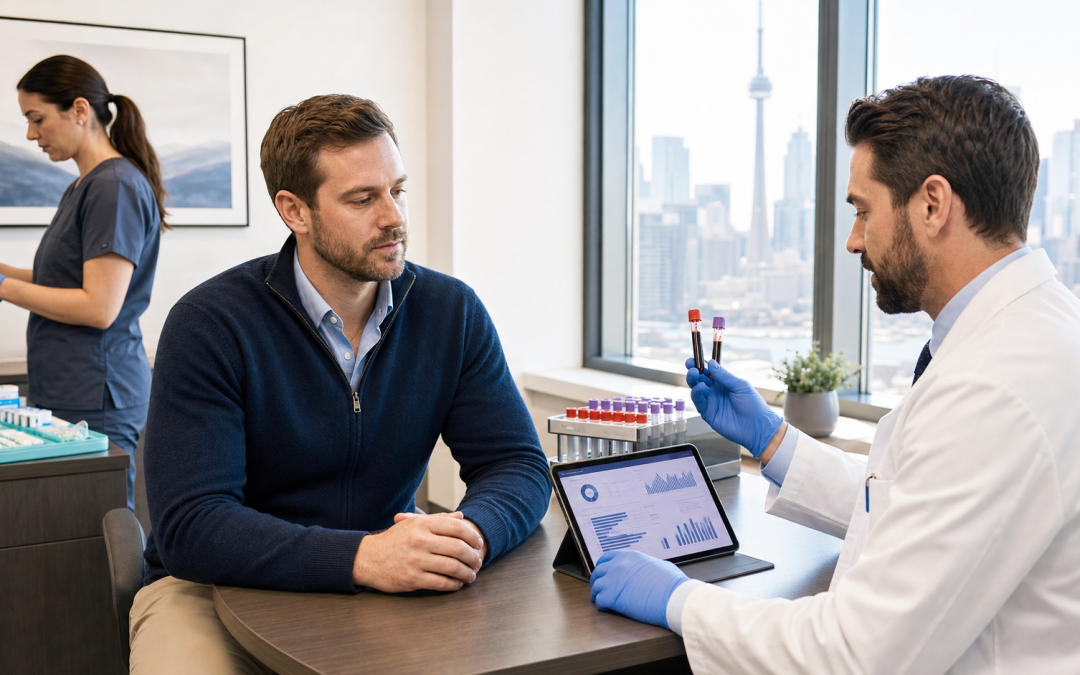
HGH vs. TRT: Why Getting It Right Matters for Toronto Men
Many men across Toronto start to notice real changes as the years go on. Fatigue creeps in, workouts feel harder, sex drive is not what it used to be, and body fat seems to hang around no matter how carefully you eat. When summer plans, patios, and cottage weekends pick up, those changes can feel even more obvious.
That is why more men are asking about hormone options like human growth hormone (HGH) therapy and testosterone replacement therapy (TRT). These two treatments are very different. They are not interchangeable, and they are not quick fixes. Each comes with possible benefits and real risks, so the goal is to find out what actually fits your body, your symptoms, your lab results, and your risk profile.
At our men’s health clinic in Toronto, we focus on careful assessment that is compliant with the College of Physicians and Surgeons of Ontario (CPSO), not hype or black‑market products. We look at the whole picture first, then decide if hormone treatment makes sense at all, and if so, which path is safest and most realistic for you.
How Hormones Change in Men After 30
Hormone levels do not suddenly crash overnight. For many men, testosterone slowly trends down over time, and growth hormone secretion patterns change with age and lifestyle. You may feel this more in your 30s, 40s, and 50s, especially when work, family, and social demands all compete for your energy.
Common signs linked with low testosterone:
- Reduced sex drive
- Erectile difficulties
- Lower mood or motivation
- Loss of muscle mass and strength
- More belly fat
Symptoms often connected with lower growth hormone levels in adults can look a bit different:
- Lower exercise capacity and stamina
- Slower recovery after workouts or injuries
- Changes in body composition even with effort
- Low sense of vitality or general drive
The tricky part is that these symptoms are not specific to hormones. Poor sleep, high stress, heavy alcohol use, some medications, depression, anxiety, diabetes, or sleep apnoea can all cause very similar problems. That is why a proper medical history, physical exam, and targeted lab testing are needed before thinking about TRT or HGH therapy.
When the weather is warm and you are more active on trails, patios, or the water, it is common to notice energy and performance concerns more clearly. That can be a useful prompt to get things checked in a structured way.
HGH Therapy Basics: What It Is and Who It’s For
Human growth hormone plays a role in metabolism, tissue repair, and body composition. In childhood, it is key for growth in height. In adults, it supports things like muscle and bone maintenance and how your body uses fat and sugar.
True growth hormone deficiency in adults is much less common than low testosterone. It usually appears in men with specific issues like pituitary gland disease, head injury, brain surgery, or certain childhood conditions. It cannot be diagnosed by symptoms alone or by a single simple blood test.
Medically supervised human growth hormone therapy usually involves:
- careful specialist assessment of history and risk factors
- specific tests, often including stimulation testing when appropriate
- clear treatment goals that are medical, not cosmetic
- regular monitoring of symptoms, labs, and side effects
When a clear deficiency is proven, growth hormone treatment may improve body composition, exercise capacity, and quality of life for some men. At the same time, there are important risks, such as:
- fluid retention and swelling
- joint or muscle pain
- changes in blood sugar and insulin resistance
- possible effects on existing health conditions
In Canada, growth hormone is a prescription drug. It is not approved as a general anti‑aging or youth‑boosting treatment. Any use must follow Health Canada rules and CPSO expectations, with ongoing follow‑up by a physician experienced in hormone care.
TRT Essentials: When Low Testosterone Is the Priority
Testosterone influences sexual function, mood, focus, muscle mass, bone health, and red blood cell production. Low levels can have a real impact on day‑to‑day life. But, like growth hormone, true hypogonadism needs more than a symptom checklist.
A proper evaluation for TRT usually includes:
- morning testosterone bloodwork, often repeated to confirm
- related tests such as SHBG (sex hormone-binding globulin), LH (luteinizing hormone), and FSH (follicle-stimulating hormone), estradiol, PSA (prostate-specific antigen), and blood counts
- review of your current medications, supplements, and substances
- screening for prostate issues, sleep apnoea, heart disease, and other factors
When low testosterone is clearly shown and no major contraindications are found, TRT may help with:
- sex drive and erectile function
- mood, confidence, and sense of drive
- muscle mass, strength, and body composition
- overall energy and day‑to‑day performance
TRT is not without risk. Possible concerns can include higher red blood cell counts, impact on fertility, prostate monitoring needs, and heart or vascular questions. A CPSO‑compliant practice will focus on the lowest effective dose, avoid over‑treatment, and make shared decisions with you after reviewing the knowns and unknowns in the medical evidence.
HGH vs. TRT: Matching Symptoms, Labs, and Risk Profile
So how do doctors decide where to look first? It starts with pattern recognition and good diagnostic work.
TRT is usually considered when:
- you have clearly low morning testosterone on repeated tests
- symptoms match low testosterone, such as low libido, erectile issues, low mood, or muscle loss
- there is a history or exam finding that points to testicular or pituitary issues
Human growth hormone therapy becomes a topic only when:
- there is a history of pituitary disease, brain surgery, radiation, or certain childhood conditions
- body composition, stamina, and recovery are significantly affected despite good lifestyle habits
- specific growth hormone testing, often including stimulation testing, shows a clear deficiency
At the same time, for many men, neither HGH nor TRT will be the first answer. Improving sleep, nutrition, exercise structure, stress load, alcohol intake, and addressing issues like diabetes, thyroid disease, or sleep apnoea can bring meaningful gains without touching hormone prescriptions.
It is also important to be clear about stacking hormones. Combining HGH, TRT, and other drugs without clear medical need increases risks and is not consistent with CPSO standards or the ethical approach we follow. The goal is targeted, not maximal, treatment.
Building a Safe, Evidence‑Based Hormone Plan in Toronto
When a man comes to our Toronto clinic to talk about hormones, we start with a confidential, unhurried visit. That includes a full health history, focused symptom review, and, when useful, screening questionnaires. A physical exam and carefully selected lab tests follow. We do not move straight to prescriptions.
Hormone care is only one part of what we do. We also look at:
- sexual health concerns, including erections and performance
- weight and body composition goals
- hair restoration and aesthetic concerns
- sleep quality, stress, and overall wellness patterns
This helps us see where hormones are truly part of the problem and where other strategies may be more effective or safer. Many men are worried about privacy when talking about topics like erectile function, low drive, or body image, especially when social and travel plans are on the calendar. We take discretion seriously, from the waiting room to follow‑up.
Ongoing follow‑up is built into any hormone plan. We review lab results, ask about symptom changes, watch for side effects, and adjust or stop therapy if needed. When it makes sense, we coordinate with your family physician to keep care consistent, in line with CPSO expectations around communication and continuity.
Next Steps If You Are Considering Hormone Treatment
Hormone health is complex, and self‑diagnosing from social media clips or online symptom lists can be risky. Non‑prescription “research” products or imported hormone kits can be unsafe, illegal, and hard to monitor for quality.
Before any appointment about hormones, it can help to:
- track your main symptoms and when they started
- note your sleep patterns, exercise habits, and alcohol intake
- list all medications and supplements you take
- bring any past lab results or medical reports
- think about your goals for the next 6 to 12 months, not just the next few weeks
The right path for you might be TRT, human growth hormone therapy, another medical treatment, or a lifestyle‑first plan with no hormone prescriptions at all. The key is a careful, evidence‑informed assessment that respects your health history, your concerns, and your long‑term safety.
Reclaim Your Energy and Performance with Targeted Hormone Support
If you are ready to address low energy, reduced muscle mass, or brain fog in a structured medical setting, we are here to help. At Sovereign Male Wellness Clinic, our clinicians carefully assess whether human growth hormone therapy is appropriate for your specific health profile and goals. Reach out to contact us and schedule a confidential consultation so we can design a safe, personalized treatment plan to support your long-term wellness.

